

Online Safety
PCHS&C are continuing to ask parents to provide appropriate supervision whilst their children are online, including using text messaging, snapchat, Instagram, TikTok etc.
As part of our whole school & college approach to online safety, this page brings together information for parents and carers to help them better understand the risks associated with using new technologies, including the internet and mobile phones, and what you can do to minimise these risks.
WHAT WE DO IN SCHOOL & COLLEGE
All students are taught how to keep themselves safe on the internet through whole school assemblies, computing lessons and are regularly reminded through different areas of the curriculum. This includes thinking about the information they put online, how to keep their social networking profiles private and where to go if they have concerns. All students and their parents / carers sign an acceptable use/behaviour policy for using ICT within school & college. Access to the internet is filtered which means that unsafe and unsuitable material is blocked. We also have online safety monitoring software installed on the computers. This is specifically designed to identify inappropriate use of computers and to encourage their responsible use.
Key Information
Online Safety Lead
Claire Endersby
Online Safety Group
The group is made up of the Chair of Governors, Online Safety Lead, Deputy Headteacher, ICT Manager, Assistant Headteacher, PSHE Lead, Computing & ICT Lead, Teaching Assistant and pupils.
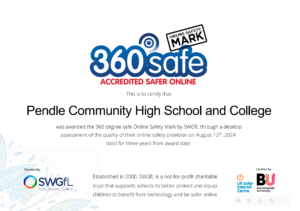
The 360 Online Safety Award (Online Safety Mark)
Monitoring, Filtering and Online Safeguarding - Netsweeper
- Education focused web filtering
- Meets the DfE recommendations for web filtering to protect pupils online and the standards for schools’ web filtering set by the UK Safer Internet centre.
- Different filtering policies based on username, group membership or IP range.
- Local control to allow your school to manage which websites and categories of websites it wishes to allow or block.
- Monitoring and reporting on web access.
- Illegal content (as listed on the Internet Watch Foundation) remains blocked at all times and access cannot be over-ridden by school staff.
- Provides filtered web access to all devices in school.
- Includes access to a reporting tool, schools can configure and schedule their own reports of internet usage via a number of templates.
- Al-Detected, Human-Verified Digital Safety Monitoring.
- Student safeguarding by monitoring the contents of their screen and alerting school safeguarding lead when a matter of concern is identified.
- Powerful Al reduces false positives and schools can configure the categories of issues they wish to be alerted to.
-
Flexibility in reporting – more reporting capability to schools, giving you the ability to fully customise your Netsweeper reports to your needs.
The Whisper Button

We provide pupils with access to the SWGfL Whisper anonymous reporting button so that they can report concerns quickly, safely and discreetly.
What Whisper Is
Whisper is an anonymous reporting tool designed by SWGfL to help children and young people speak up about online or offline worries — such as bullying, harmful online content, or concerns about themselves or someone else.
It aligns with national expectations for offering safe, accessible reporting mechanisms and complements our wider safeguarding procedures.
How It Works
- Pupils can click the Whisper button on our website from any device.
- They can send a message anonymously or choose to include their name.
- The message is securely transmitted to school safeguarding staff.
- Staff respond following our safeguarding and child protection procedures, acting proportionately and ensuring support is provided.
Why We Use Whisper
- It empowers pupils who may feel hesitant to speak face‑to‑face.
- It promotes early intervention, helping us address concerns before they escalate.
- It supports our commitment to providing safe, confidential and accessible safeguarding routes.
The Whisper button is visible on every page of our website in the bottom right hand corner.
GDPR & Online Safety
Data protection and online safety are closely linked in schools. Under the General Data Protection Regulation (GDPR), schools must ensure that all personal data they process is handled securely and responsibly. This legal duty forms a key part of keeping children safe online. Schools are required to maintain high standards of online data security, and inspectors specifically consider how well schools meet these expectations during safeguarding reviews.
GDPR principles run through several of our policies, including the Data Protection Policy, Online Safety Policy, Acceptable Use Agreements, and our Filtering and Monitoring Policy. These policies set out how we protect pupil information, manage digital systems securely, and ensure that any online tools or platforms used by the school meet strict data protection requirements. In practice, this means ensuring safe handling of digital records, secure communication systems, controlled access to information, and staff awareness of how to safeguard personal data wherever technology is used.
Staying current
Online risks evolve quickly, and so does our practice. We remain up to date by engaging with:
- UK Safer Internet Centre updates and campaigns
- NSPCC Learning and e‑safety guidance
- National safeguarding bulletins and SEND safeguarding insights
- Weekly ‘Wake up Wednesday’ guides.
- Regular Online Safety Group meetings.